Plus Ça Change – June 18, 2026
I’ve returned to serious plotting, abandoning pantsing for the moment at least. The intricacies of family finances, property transfers, and inheritance (Gran Catherine dies) requires some serious thought on how to spin a fictional narrative that plausibly allows for all the details. Most of this complexity happens because very smart people (my protagonists) must deal with racist laws governing who can give what to whom.
Looking a bit downstream, that racism becomes more and more widespread, evident in the actions of the hierarchy in the Catholic Church. From previous research I’ve created lists of churches, addresses at the time, when they appeared, names of priests, and so on. Marie was a devout Catholic. Perhaps a tiny tidbit shows up in the story, but if not (and it’s almost always not) at least the narrative will be rooted in reality. In all that digging I never found the name of the first pastor of the Saint Augustine parish, which begins in 1841.
I am particularly interested in Saint Augustine because it will be a significant location in the narrative. It’s in Marie’s neighborhood. Without doubt she went to this church. This is where The War of the Pews happened. This is where Henriette DeLille, a free woman of color, founded a congregation of nuns made up of women of color: the Sisters of the Holy Family.
I really don’t need the pastor’s name, but I’ll try one more time. Off I go into dissertations, web sites… I found a bunch of new sources of course. The best is a detailed history of the diocese in the archives of the University of Notre Dame. It’s all there, parish after parish. Exactly what I need, most of it matches what I already knew.
For example, the Saint Patrick parish appears circa 1833. This is the only parish other than the cathedral for almost a decade. It was intended for Irish immigrants, and English speaking. I have zero difficulty finding information: date of dedication, who the first pastor was (Adam Kindelon, a good man from what I read), how he was replaced by politically-savvy priests, one of whom became the next bishop. Kindelon went on to create an orphanage on Bayou St. Jean, died saving the boys from a flood.
The next parish that appears in this detailed archive dates to 1844. It’s for German immigrants.
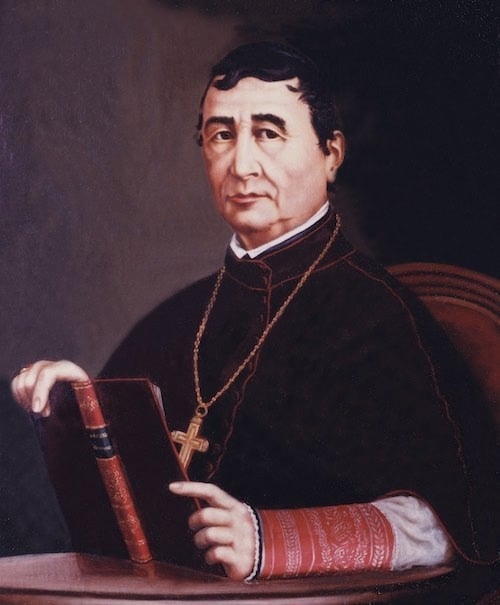
Except, I know from previous digging that the people of color petitioned the bishop (Antoine Blanc) for their own parish in 1841, which petition was granted. The parish of Saint Augustine appears 1841-1842. None of this is in the best archive of the entire diocesan history. Not. Once. Not. Ever. Not a word. The parish for people of color doesn’t exist in this particular diocesan history. I find the absence of this information probably says something about the racists who wrote history.
I found out what I wanted after a LOT of hunting. The first pastor was Étienne Rousselon. His name may show up. But I got a lot more history from tracking down Rousselon’s name, and some of that will show up in the narrative, because the story of this parish is shaped by the racism of the time.
People of color were slowly driven out of the Cathedral. That’s why they petitioned the bishop for a parish of their own. And why do I think Antoine Blanc was a racist? Because he probably got Father Kindelon tossed out of Saint Patrick’s to advance his own career. Because as bishop he forbade the Sisters of the Holy Family from wearing habits or taking vows in public. Can’t have Black nuns, now can we.