Plus Ça Change – September 30, 2026
OR: Characters aren’t always who you want them to be.
The first Thanksgiving in New Orleans was January 15, 1846, a Thursday. This turned out to be a lot more informative than I expected. Nothing like reality to make a hash out of fiction.
In December ’45 the Governor proclaimed the following Jan 15 to be a day of Thanksgiving to the Almighty God. Everyone was to get in their churches and pray. Yes, not November, January. And yes, the proclamation was almost entirely ignored. Politics.
Thanksgiving was a “good old New England custom.” It was widespread in the North, and religious abolitionists used it to preach the abolition of slavery. This did not sit well in New Orleans, home of the richest American slave trade.
Two churches (count ‘em two) held services. One was the Poydras Street Church. The other was the First Congregational Church, aka The Strangers’ Church, The Reverend Doctor Theodore Clapp, minister. He’s a character already, because open-minded and ecumenical. Turns out, only to a degree.
He arrived in New Orleans about 1822, a northerner from Massachusetts. He was the president of the College of Orleans, and created a scandal by holding a ball for free people of color and slaves. I didn’t think about it on first blush, but note that there are no white people invited. He started out a Presbyterian, and was thrown out in 1832 by the official hierarchy for heresy. He’s friends with Jews, with Catholics, with people who help the poor and orphans. He welcomes complete strangers into his church. So, from a modern perspective, what’s not to like here?
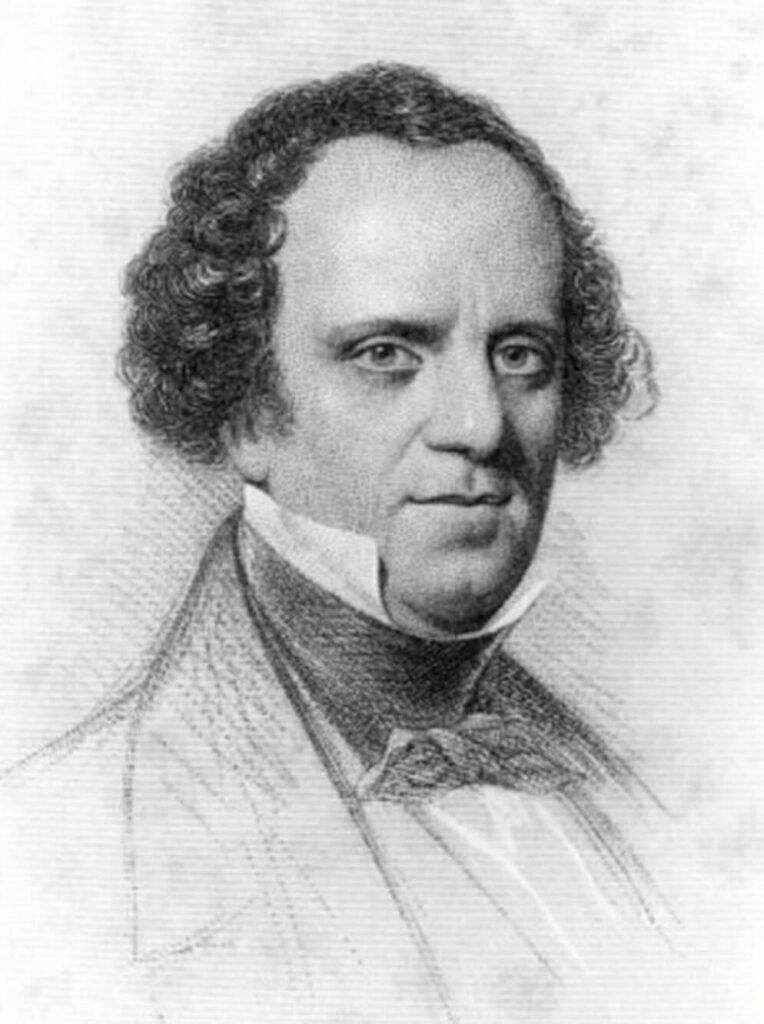
I knew he was pro-slavery, but those are the waters he swims in. In the early appearances, the focus was his ecumenical inclusiveness, not his support for slavery.
In 1846 he is one of two pastors who celebrate Thanksgiving, very ecumenical I imagine. In the narrative I want Marie there, she’s invited, and she goes because he is an inclusive human being. This means, for writer-boy, that I have to more deeply research him and his church.
What’s the inside of his church like? He describes it in his memoir, and I have a period eye-witness account. The 118 pews on the main floor are of course bought and paid for by parishioners. But he has free seats up in the galleries. These are for people who don’t own pews, strangers. In the vestibule there are signs pointing to the stairs to the galleries, left and right, seating perhaps a total of four hundred people. The gallery to the right is for strangers visiting the church. The gallery to the left is for colored people. Uh oh.
In the scene he’ll sermonize. So I go find newspaper accounts of his Thanksgiving sermon, and the actual text of a sermon on slavery. And so I gain deeper insight.
What I discover is, he was opposed to the “amalgamation” of the races. He thought slavery was divinely ordained. Leviticus 25. What made him radical to many in his time is that he actually allowed them in his church. As long as they took the stairs to the left. Black people were Christians, however second rate. From Animal Farm, this applies. “All animals are equal, but some are more equal than others.” He is an enthusiastic apologist for slavery, and is firmly of the belief that abolitionists are radicals denying the truth of the Bible. His logic is, in his own mind, impeccable. God Himself dealt in slaves, so slavery is moral and good.
This deeper understanding means the chapter will take a different tack. It still fits, but the sermon will be much less “kumbaya” and much more political, anti-abolitionist. Marie will be surprised by this, sorta. She knows his belief system, but politics like this coming into the church, not what she was expecting. She rejects his belief system completely. From a narrative perspective, I’m hoping to accomplish yet another nuance to white man’s thinking. “They are God’s children, just keep them in their place.”
This also causes upstream tweaks. He’s already in the story, I need to tweak how I present him to encompass this racist belief system, and why Marie continues to deal with him.
It ain’t over until it’s over, and even then it ain’t over.