Authors have always been on the scam end of things. Vanity publishing has been around for literal centuries, and content itself has been used, abused, and weaponized by creators, publishers, and critiquers. I mean, there’s something to the tropes of us working in the dark, alone, in writer garrets. The combination of social isolation and conviction of the glory of our work plays into how writers want to have their brilliance properly appreciated. From pay-to-play to paying to have work in an “anthology” or “collection” that never rejects but always charges, the non-traditional sector, until a few years ago, was a sketchy part of the publishing world. Sites like Writer Beware have been great at exposing these scams — but, of course, one needs to find the Writer Beware site in order to read up on it.
Older email scams are not working as well, as the pre-tech writer group “ages out.” However, as the Nigerian princes and their 419 scams prey on smaller and smaller population groups, AI has come to evil’s rescue.
Spearphishing depended on knowing things about the specific target and snagging them — as if there was a connection or reason for the interaction between scammer and victim. Examples are emails appearing from a real domain, or a text message from a boss asking a subordinate for a spreadsheet. The request usually has a human manipulating data collection to create the spearpoint. No more.
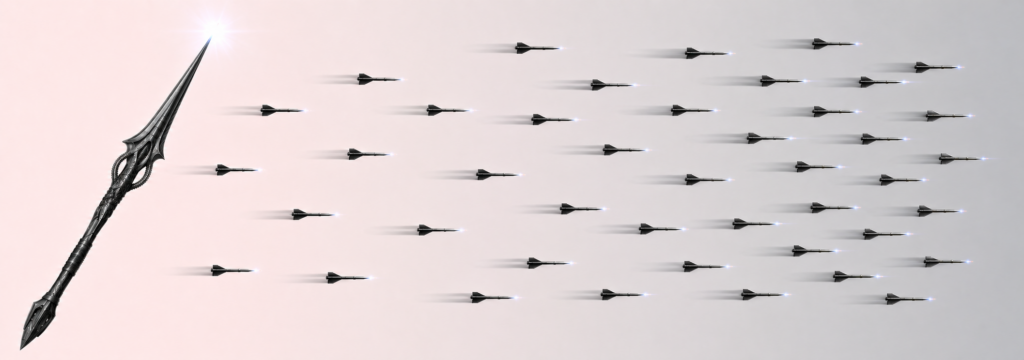
Flechettes are (yet another) horror of warfare, akin to cluster bombs: Fire once, hit many. A tank round, filled with small, finned darts—intended to injure anyone in its path.
Flechette phishing weaponizes AI agentic data collection, AI content slop “analysis,” and creates calls to action—”just reach out for more info…” to hundreds of victims at once, fine-tuned to their known stories, books, and genres.
Here’s what was sent to me:
- AI-generated title, pulling (randomly?) one title. There’s a presumption that I think is calculated that it looked for authors with multiple titles.
- AI analysis.
- Last para: present “weakness” in how works relate
- Call to action (previous paragraphs are canned, I think, and not custom-generated).
- Name of a real Nigerian politician with a connection to things literary. The other Emmanuel, Vincent, in the email address, is a climate scientist. Again, a name that would show up as legit in a simple search.
- My “gotcha” hook. I don’t use that email address for anything — if someone’s sending to shlomih@…, they don’t know me.

I figured it was a phish the second I saw the AI-slop pandering. But, for someone less attuned to the narrative and more to the sychophantic pedantry, this simple request — just reach out to us — is the start of a modern pig butchering process.
This is the start. How much more thought will untutored writers need to give to not get snookered?