In The Flow of Time – August 10, 2024
Life is full of “stuff” like music, song, dancing, games… so as part of understanding the world I’m going to write about, I look into all sorts of topics. Some are more “tangential,” not part of the central narrative. So I’m happy with pretty light-duty research. What follows comes from several websites.
Gambling was a real “thing” in antebellum New Orleans, the Las Vegas of its time. Visitors took advantage of what was available. New Orleans had a street named Craps in honor of the ubiquitous dice game imported by the French settlers. (I, of course, have maps!)
John Davis opened the first American gambling casino in New Orleans around 1822. The club, open 24 hours a day, provided gourmet food, liquor, roulette wheels, Faro tables, poker, and other games. Davis also made certain that sex was never far away. Dozens of imitators soon followed, making the gaming dens a primary attraction in what was a truly international port city. Card “sharpers” became a thing.
Poker showed up here, derived from a French card game called poque. It moved onto the riverboats, becoming the stuff of legend. They played Mouche, Bezique, Buillotte, Bourré, Faro, and Twenty-One. They bet on Draughts, Billiards, Dominoes, Trictrac, Jacquet, and Roulette. No watering hole was without a billiard table. People played for fun at home, and for real money in the taverns and casinos.
In 1835 the Louisiana legislature outlawed casinos. John Davis closed the Crescent City House and returned to the theater business, but the casinos just went underground.
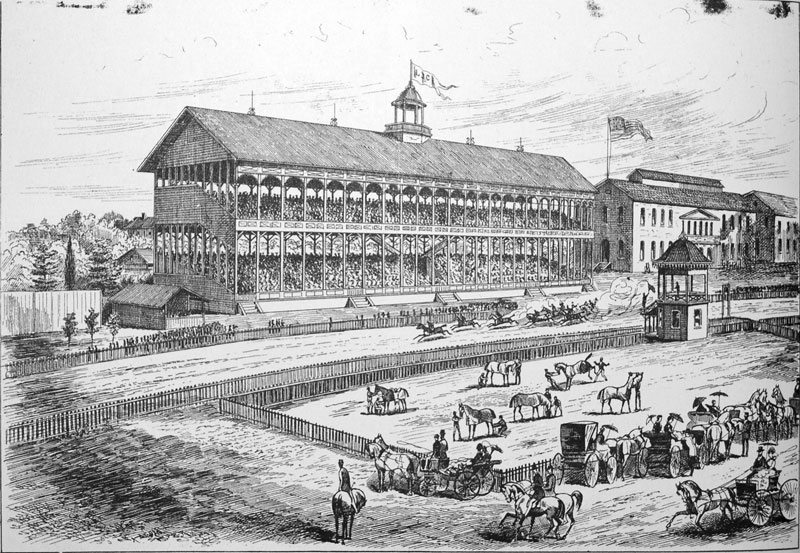
Then there were horse races. Louisiana in general, and New Orleans in particular, was it. The first formal track dates to 1820, on the Livaudais plantation uptown. Another appeared downriver. The third was also uptown, alongside the new high-rent suburb of Carrollton. Because betting on horses is what the better class did. That track was then where Audubon Park is now.
The fourth track, Metairie, is today the Metairie Cemetery. If you go look at it with map software, you can see the outline of the oval among the graves, right alongside I-10.
History’s ripples flow through time, sometimes invisible unless someone tells you where to look.