In The Flow of Time – September 1, 2024
Way back when, in an entirely different novel, I wrote a scene that mentions folks singing as they walk down the street after a wedding. No real music, of course, just that that’s what was going on. And one of my writer friends said, you know what would be awesome, if you had a real song there.
Yah, right, like I can come up with lyrics and melody from 1635. I did! Quelle surprise! 🙂 A couple of others too, later in the story, since he was right and if I can write right, well all right!
Researching this new novel in New Orleans, we’re in the 1800s. This is a LOT easier. On top of which, joie-de-vivre expressed in music and dance will be a leitmotif throughout this novel. Congo Square will be a regular location, African slaves celebrating their roots. So I’m going to need real dances and real songs. Research 🙂
I’ve identified several dances. I have a few old songs. One of them is Michié Bainjo (English, Mr Banjo). The instrument (now the banjo) comes from Africa. The song was, pretty surely, born in the Americas, a slave song. Pete Seeger covered this very old Creole tune. I don’t have all the Creole lyrics, but I have some, and based on that I think he sanitized it a bit. Sanitized? Well, race and skin color are difficult topics to address. Here’s what I think.
| A Creole Couplet | In English (two translations) |
| Voyez ce mulet la, Michie Bainjo, Comme il est insolent! | Look at the dandy, oh there Michie Banjo, Doesn’t he put on airs? —- Look at Mister Banjo, funny little fellow Doesn’t he put on airs! |
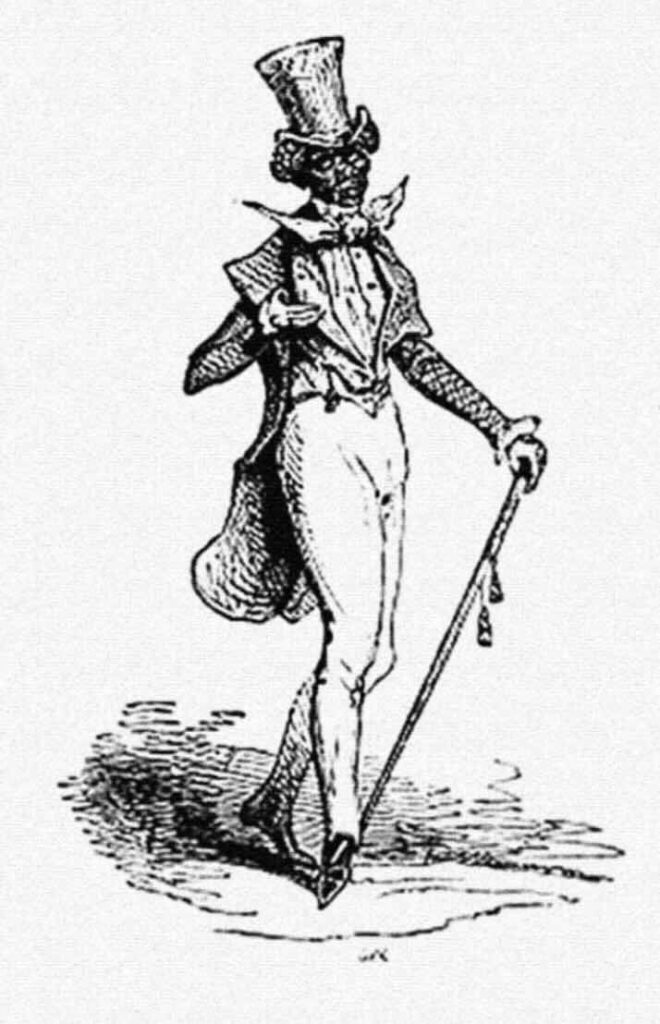
The magic word here is “mulet.” It means a mule, and by metaphor a jackass. And by poetic license, a slang word for mulatto (mulâtre). It is a triple-entendre. The English translation completely loses the layers of meaning. The French word “insolent” also has multiple interpretations, carrying the not-necessarily-consistent meanings: sassy, irreverent, impudent, ridiculous.
This song is, of course, played on a banjo about Mr. Banjo and pokes fun at the jackass who is totally full of himself. It’s recursive musical ridicule. He has a cocked hat, a fancy cane, a big diamond, and shiny shoes that squeak when he walks. He thinks he is somebody, and he’s nothing but a dandy. That he is mixed-race, that is the subtle point.
In the context of the story, I’m going to have Marie Laveaux as a young woman singing and dancing to this tune in Congo Square, and suddenly realizing what it really means. It isn’t just a funny little dance tune. This is, sotto voce, a song about Black people hating those who try to be white. She discovers an entirely new dimension in racism, slaves judging the free people of color of mixed race. Her mother wants to be white. Her father could be the dandy. It is a song about jackasses who think they are better than other people because of the color of their skin, and that works in both directions.
Captured in a delightful and harmless little melody.