Plus Ça Change – October 10, 2026
Can I get inside the head of a 9-year-old boy and tell part of the story from his point of view? Jude Paris is complete fiction, but he’s central to the rest of the narrative, and at this point he’s nine. In my planning he has always been a point-of-view character, he will tell parts of the story. This is the first time I get inside his head. He is precocious, multi-lingual, and truly a brilliant child, his mother’s son. He LOVES school.
But Mom is Eliza, Marie Laveaux’s chosen daughter, and technically a slave. He is being expelled from school, permanently. It isn’t Mom’s fault. It isn’t the teacher’s fault, and it isn’t his own fault, although he thinks it is. It isn’t because of anything he’s done; it’s because he’s a slave. Teaching a slave is illegal.
Free people of color believed in education. But having a slave side by side with their children, well that’s an indignity. Sad, but fact. There is an aphorism that captures what culture drove into their belief system. “If you’re white, you’re all right. If you’re brown, stick around. If you’re black, get back.” That’s what this chapter is about. The truth is hard, even harder when you’re nine and facing the truth of the world you live in.
The story is based on historical fact. Ludger Boguille, the teacher, did enroll a slave and did expel the boy when parents found out and pulled their kids from his school. He tutored the boy privately afterwards.
I’m imagining how Boguille would soften the blow. I want him to tell the boy he’s going to continue the education, and to sweeten the deal loans him a book. So off I go in hunt of something current in 1847, something an educated person would read, and I come across The Count of Monte Cristo, serialized 1844-1846, published as a book in 1846. It’s perfect. A best seller, brilliantly popular, a tale of adventure, revenge, and redemption.
Alexandre Dumas—the author—was a free man of color. His grandmother was a slave in Haiti. He is precisely the kind of author Boguille would enjoy and teach. The story is historical fiction, set in Napoleonic France, so we have overlap with the history they’ve been studying in class. Wait, I write historical fiction. 🙂
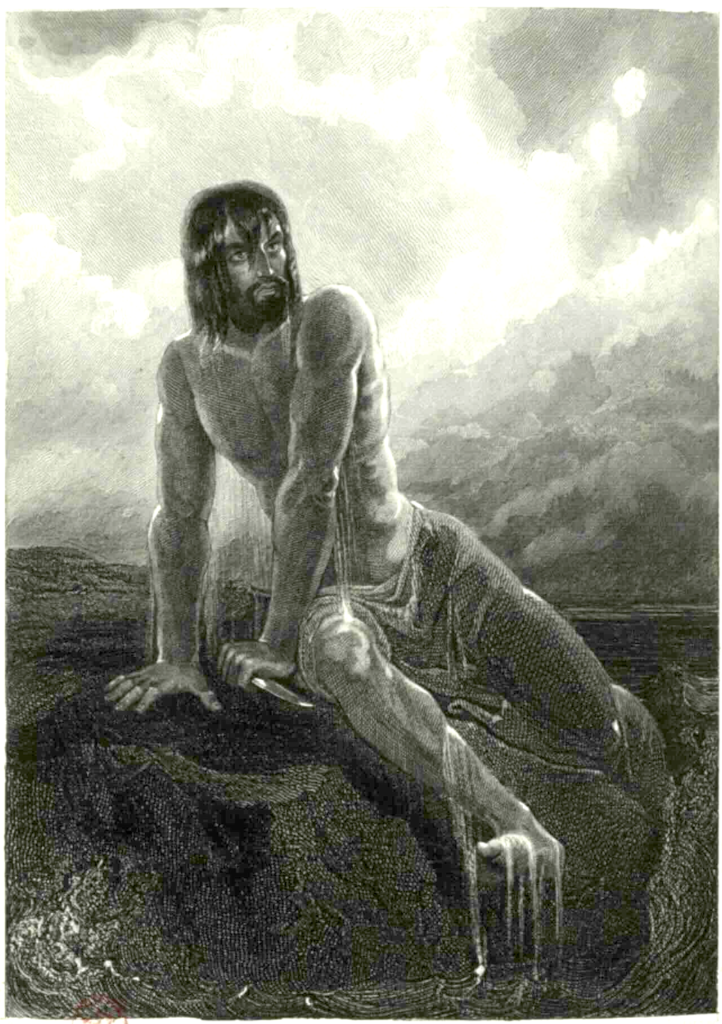
This is looking like it’s going to fit nicely. So I dig up a copy of the first edition from 1846, in the national archives in France. This is what Boguille would own. I have what it actually looks like, leather binding, marbled paper, and the illustrations. One of them hits me like the proverbial ton of bricks. Dantès—the protagonist—sits on a rock, knife in hand, having just cut his way out of a burial shroud. He has escaped by pretending to be dead.
Dear Reader doesn’t know this, but I know where the story is going. There is a critical overlap between Dantès and Jude, and not just the shroud. Dantès used secret identities to accomplish his goals. So will Jude. I saw it instantly, it’s an absolute “DUH!” I might have thought of it myself eventually, but so far I hadn’t, and it’s perfect.
I’m already tweaking places downstream, with throwbacks to Dantès and this book, this moment when Jude is thrown out of school forever. He doesn’t know it yet, but the direction of his life has just changed, and not for the better. In the end, like Dantès, he will need redemption.
So, the teacher’s desire to soften the expulsion uses Jude’s love of books, which brings up a classic book that informs my book. I am more than OK with that.