Plus Ça Change – July 13, 2026
The chapter I’m working on is fraught, to say the least, in more ways than one. The working title is “Torture” so that gives you an idea.
On April 10, 1834, Delphine LaLaurie was the absolute pinnacle of white society in New Orleans. On that day a slave woman set fire in the kitchen wing of the mansion, with the intent to commit suicide. She feared she was going to be sent to the attic over the kitchen, which is where the owners sadistically tortured and probably murdered slaves. Suicide by fire was preferable.
The challenge with writing fact-based fiction is you run into a story like this. It’s real. It is awful. It happened. But in the centuries since, the facts of the event are blurred behind sensationalized and commercial hyperbole: novels, movies, lurid pseudo-history. The horror so burned New Orleans consciousness that two hundred years later the rebuilt mansion is a top tourist attraction. Sadistic torture will do that.
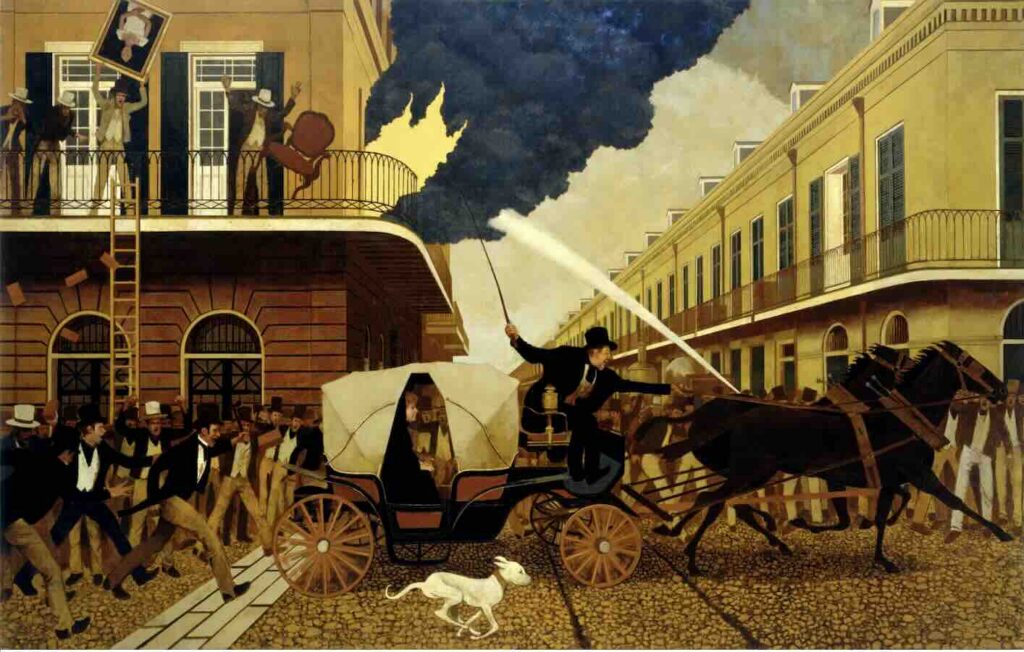
Honestly, I’d like to just skip it. I don’t think I can. It is an infamous part of New Orleans history. So, my fiction is that Marie (and her Irish uncle Doctor Josias Kerr) are involved in the events of this day. This is imagination, but I want—as much as possible—to layer that on top of real history: the way New Orleans was in 1834, and the actual events at the LaLaurie mansion. To that end I go off and research all kinds of little background details. Most of this research is quick and dirty. But it does give me the name of a real tavern, the name of the lieutenant of the guard, the price of a cup of coffee, the name of a neighbor who tried to interfere, what he might have said, and the insolent and haughty response of Madame LaLaurie and her husband while the fire is burning as they attempt to hide their crimes.
For real, thousands went to the jail to gawk at the victims. (Yes, the victims were put in jail, they were slaves!) A mob formed. Delphine and her doctor husband escaped in their coach and were never apprehended or punished. The mob tore the building apart. It stood as a ruin for years, and was ultimately rebuilt.
The facile interpretation is that the common people were so horrified by the mistreatment of slaves that they rioted. The problem with this interpretation is that the vile treatment of slaves was perfectly normal. Perhaps not as sadistic as this, but mistreatment was common. Without doubt slave owners occasionally murdered their slaves. Even though technically illegal, they were typically not charged with crime. What was legal? A slave runs away for more than a month. First time? Cut off their ears. Second time? Cut their hamstrings. And we think torture is suddenly over the top?
The vicious and vile treatment of human begins because of their race and social class was normal. I think what really set off the mob isn’t that torture happened. It’s that it happened downtown for everyone to see. The fiction that we treat slaves well died in that fire.
So I have Marie and Josias at the end of the day, looking at the mob from a safe distance. Because this is what I think is the truth.
“So why the outrage?” Marie asks.
“Because it’s supposed to be out of sight,” her uncle replies. “Plantations are elsewhere. What happens inside a home is private, even murdering a slave. This was public, the fiction is revealed for the lie that it is. It’s easier to destroy the person who made them see, than it is to admit the truth.”